5 Essential Strength Training Exercises for Older Adults: Advised by Dr. Mehak Nanda (PT)
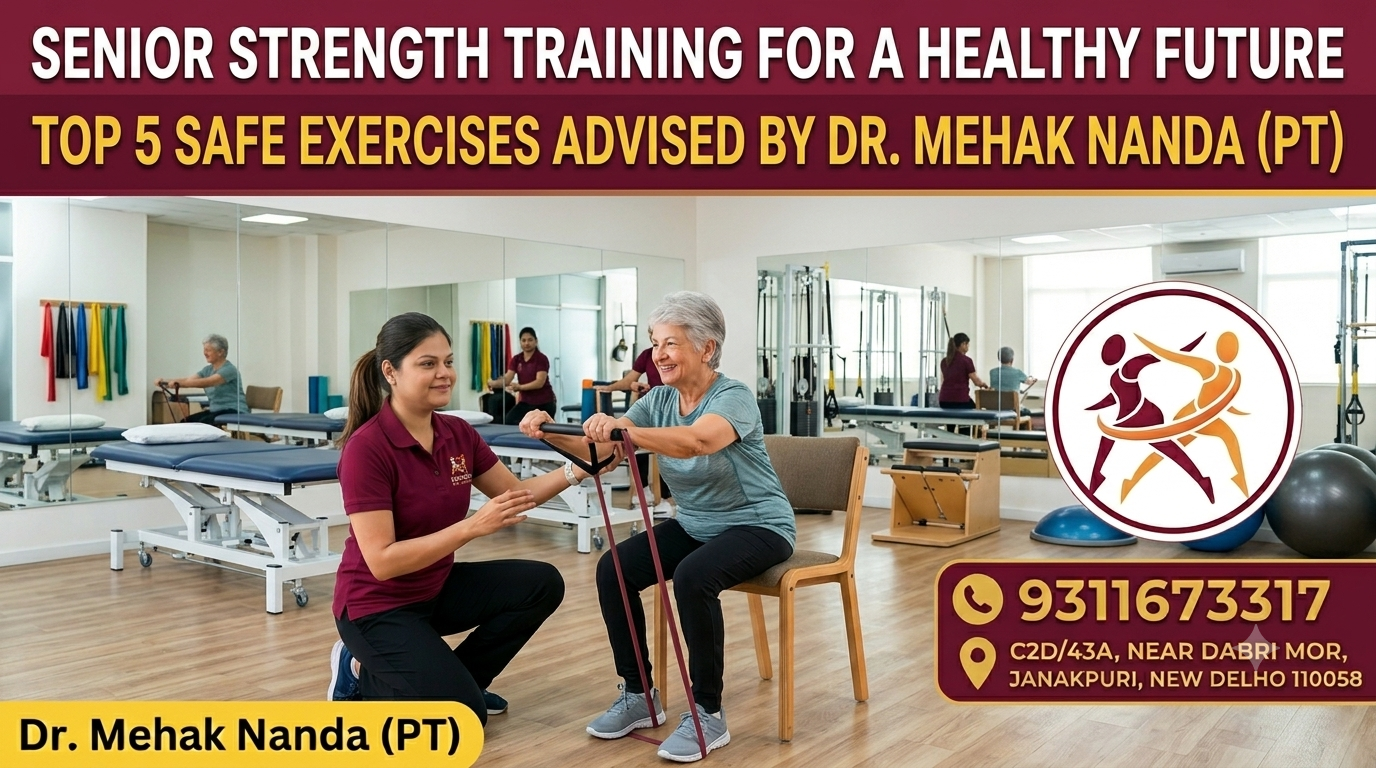
Top 5 Safe Strength Training Exercises for Seniors | Expert Physiotherapist Guide
Here are the top 5 strength training exercises recommended by Dr. Mehak Nanda (PT) for senior citizens to stay active, strong, and independent.
1. Chair Squats (Sit-to-Stands)
Target Areas: Quadriceps, glutes, and core.
Why Dr. Mehak Nanda Recommends It: This mimics the everyday movement of getting out of a chair or car. It builds crucial lower-body strength required to maintain independence.
-
How to do it:
-
Sit on a sturdy chair with your feet flat on the floor, hip-width apart.
-
Lean forward slightly from the hips, engage your core, and press through your heels to stand up completely.
-
Slowly lower yourself back down to the chair with control.
-
-
Repetitions: Aim for 8 to 10 controlled repetitions with 3 sets.
-
Safety Tip: If needed, place your hands on the armrests for support initially, but aim to progress to using just your legs.
2. Wall Push-Ups
Target Areas: Chest, shoulders, and arms.
Why Dr. Mehak Nanda Recommends It: Upper body strength is vital for pushing open heavy doors or catching yourself during a slip. Wall push-ups offer all the benefits of a traditional push-up without straining the lower back or wrists.
-
How to do it:
-
Stand facing a flat wall, about arm's length away.
-
Place your palms flat on the wall at shoulder height and shoulder-width apart.
-
Slowly bend your elbows, lowering your upper body toward the wall while keeping your body in a straight line.
-
Push yourself back to the starting position.
-
-
Repetitions: 10 to 12 repetitions with 2 sets.
3. Standing Calf Raises
Target Areas: Calves and ankles.
Why Dr. Mehak Nanda Recommends It: Weak ankles are a leading cause of balance loss and falls in older citizens. Calf raises strengthen the lower leg, significantly improving stability while walking on uneven surfaces.
-
How to do it:
-
Stand tall behind a sturdy chair or kitchen counter, holding onto it lightly for balance.
-
Slowly lift your heels off the ground until you are standing on the balls of your feet.
-
Hold for 1–2 seconds, then slowly lower your heels back to the floor.
-
-
Repetitions: 12 to 15 repetitions with 2 sets initially.
4. Resistance Band Bicep Curls
Target Areas: Biceps and forearms.
Why Dr. Mehak Nanda Recommends It: Whether it's carrying groceries, lifting a watering can, or picking up a grandchild, arm strength is essential for daily life. Resistance bands provide smooth, joint-friendly tension.
-
How to do it:
-
Sit or stand comfortably. Place a loop resistance band under your feet, holding one end in each hand (or use light dumbbells).
-
Keep your elbows tucked close to your sides.
-
Slowly bend your elbows, bringing your hands up toward your shoulders.
-
Lower your hands back down slowly against the resistance.
-
-
Repetitions: 10 repetitions per arm with 3 sets.
5. Single-Leg Balance with Support
Target Areas: Core, hips, and deep stabilizing muscles.
Why Dr. Mehak Nanda Recommends It: Balance is a "use it or lose it" skill. This exercise trains the brain and muscles to work together, drastically reducing fall risks.
-
How to do it:
-
Stand next to a wall or a sturdy chair for safety.
-
Lift your left foot slightly off the ground, balancing entirely on your right leg.
-
Try to hold this position for 10 to 20 seconds. (3 sets)
-
-
Lower your foot and repeat on the other leg.
-
-
Progression: As your balance improves, try hovering your hand just an inch above the chair rather than holding it tightly.
A Note on Safety from Physio For Change
Dr. Mehak Nanda's (PT) Golden Rule: "Consistency matters more than intensity. Always warm up with 5 minutes of gentle walking or shoulder rolls before starting, and never push through sharp pain."
Before starting any new exercise regimen, it is highly recommended to consult a professional physical therapist to customize these movements to your body's unique needs.
Want a personalized mobility plan? Reach out to us at Physio For Change today to schedule a consultation!