Home care physiotherapy
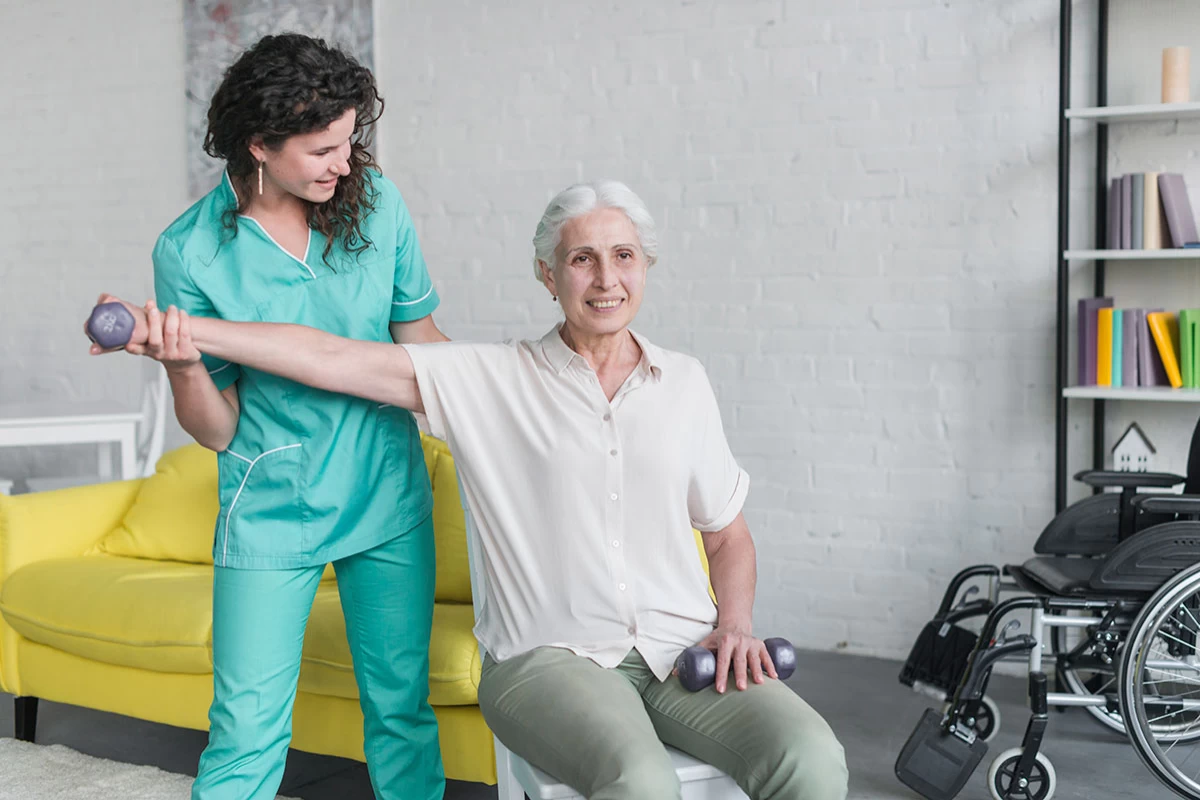
Home care physiotherapy
What is Home Care Physiotherapy?
It is a client-centered service where I, as your physiotherapist, come to your home to help you recover, regain independence, and manage your condition. This model is especially beneficial for:
Book an appointment today
- Patients recently discharged from the hospital.
- Individuals with mobility issues that make travel difficult or unsafe.
- Older adults managing age-related conditions.
- Those who require rehabilitation in the specific context of their home environment.
How Does It Work on Conditions?
The power of home care physio lies in its direct application to your real-world environment. Here’s how it works for various conditions:
- Post-Surgery Rehabilitation (e.g., Hip/Knee Replacement):
- How it works: I can guide you safely through exercises where you need them most. We can practice navigating the actual stairs in your home, getting in and out of your own chair, and walking on your specific floor surfaces. This builds confidence and ensures a safe transition back to daily life.
- Neurological Conditions (e.g., Post-Stroke, Parkinson's):
- How it works: Recovery is about re-learning functional tasks. In your home, we can work directly on the activities that are meaningful to you—like walking from the bedroom to the bathroom, preparing a simple meal in your kitchen, or managing thresholds and rugs. This context-specific training leads to better, faster functional outcomes.
- Balance Issues and Fall Prevention:
- How it works: This is a key strength of home care. I can conduct a thorough fall risk assessment of your actual living space. We can identify and address hazards like loose rugs, poor lighting, or cluttered walkways. Then, we'll practice balance and strengthening exercises right there, making your home a safer place and reducing your fear of falling.
- Chronic Conditions (e.g., COPD, Heart Failure):
- How it works: We can develop a tailored exercise program to improve your endurance and breathing, all while monitoring your response in a comfortable setting. I can also provide energy conservation techniques and advice on pacing your daily activities within your own environment.
- General Deconditioning and Weakness:
- How it works: The goal is to get you strong for your life. We will use functional tasks—like standing up from your own sofa, lifting a pot, or reaching for a shelf—as part of your rehabilitation. This makes therapy immediately relevant and empowers you to regain independence.
Therapies offered
-
- Electrotherapy
Electrotherapy is a tool that uses specific forms of electrical energy or sound waves to assist your body's natural healing processes. The primary goals are to reduce pain, decrease inflammation, promote tissue repair, and improve muscle function.
It is essential to understand that electrotherapy is not a magic cure. It is most effective as an adjunctive treatment, meaning it works best when combined with active approaches like therapeutic exercises, manual therapy, and movement re-education. Think of it as a way to manage your symptoms so you can more effectively participate in the core of your rehabilitation.
Here are some of the common electrotherapy modalities we use and their key benefits:
1. TENS (Transcutaneous Electrical Nerve Stimulation)
- What it is: A device that delivers low-voltage electrical currents through electrodes placed on the skin.
- Primary Benefit: Pain Management. TENS works primarily by the "Gate Control Theory," where the electrical impulses interfere with and block the transmission of pain signals to the brain. It can also stimulate the release of endorphins, the body's natural painkillers.
- Common Conditions: Acute and chronic pain, such as lower back pain, arthritis, and post-surgical pain.
2. Ultrasound Therapy
- What it is: This uses high-frequency sound waves (inaudible to humans) that are transmitted deep into the tissues through a transducer head.
- Primary Benefit: Deep Tissue Healing. The sound waves create micro-vibrations that generate gentle heat deep within the tissues. This improves blood flow, reduces inflammation, and accelerates the healing of soft tissues like muscles, tendons, and ligaments.
- Common Conditions: Tendinitis (e.g., tennis elbow), muscle strains, scar tissue breakdown, and joint contractures.
3. IFT (Interferential Therapy)
- What it is: A technique that uses two medium-frequency currents that cross deep within the tissues to produce a low-frequency interference current.
- Primary Benefit: Deep Pain and Edema Reduction. Because it penetrates deeper than a standard TENS machine, IFT is excellent for managing deep-seated pain and reducing swelling (edema). It also helps stimulate muscles and improve blood circulation.
- Common Conditions: Deep muscle spasms, post-traumatic swelling, and chronic back pain.
4. NEMS (Neurological Electrical Muscle Stimulation)
- What it is: Similar to TENS, but specifically designed to elicit a muscle contraction. It uses electrical impulses to stimulate the nerves that control a specific muscle or group of muscles.
- Primary Benefit: Muscle Re-education and Prevention of Atrophy. NEMS is used to help re-train muscles to contract after injury or surgery. It is vital for maintaining muscle mass and strength when a patient has difficulty moving voluntarily.
- Common Conditions: Post-surgical rehabilitation (e.g., after ACL reconstruction), muscle weakness, and to prevent disuse atrophy.
5. Laser Therapy (Low-Level Laser Therapy or LLLT)
- What it is: This involves applying low-intensity laser or light-emitting diodes (LEDs) to the injured area.
- Primary Benefit: Cellular Repair and Anti-Inflammation. Unlike surgical lasers, therapeutic "cold" lasers do not heat tissues. Instead, they act on a cellular level to enhance metabolism and promote tissue repair. It is particularly effective at reducing inflammation.
- Common Conditions: Soft tissue injuries, wound healing, carpal tunnel syndrome, and neck/back pain.
-
- Manual therapy
In the simplest terms, manual therapy is the skilled "hands-on" component of your treatment. Instead of using machines, your physiotherapist uses their hands to apply precise pressures and movements to your muscles, joints, and nerves. The goal is to improve the mobility of stiff joints, relax tense muscles, enhance blood flow, and restore your normal, pain-free movement.
Think of it as a very targeted and therapeutic approach to addressing the specific mechanical issues causing your pain or limiting your function.
The benefits of this hands-on approach are wide-ranging and can help with numerous conditions, including:
1. Joint Mobilizations and Manipulations
- What it is: Gentle, rhythmic movements or a quick, small thrust applied to a stiff joint to restore its natural glide and range of motion.
- Primary Benefit: Restores Joint Mobility and Reduces Pain. By improving how the joint moves, we can decrease stiffness and the pain that comes with it.
- Common Conditions: Osteoarthritis, spinal stiffness (neck or back pain), and frozen shoulder.
2. Soft Tissue Mobilization and Massage
- What it is: Techniques focused on the muscles, tendons, and ligaments. This can include deep pressure, stretching, and specific strokes to release tension and break down scar tissue.
- Primary Benefit: Releases Muscle Tension and Improves Tissue Health. This reduces muscle spasms, improves flexibility, and promotes healing by increasing circulation.
- Common Conditions: Muscle strains, tendinitis, post-surgical scarring, and tension headaches.
3. Neural Mobilization
- What it is: Gentle, gliding movements designed to improve the mobility of your nerves. When nerves are irritated or stuck, they can cause pain, tingling, or numbness that travels down your arm or leg.
- Primary Benefit: Improves Nerve Gliding and Reduces Nerve-Related Symptoms.
- Common Conditions: Sciatica, carpal tunnel syndrome, and radiculopathy (pinched nerve in the spine).
4. Myofascial Release
- What it is: A sustained pressure applied to the connective tissue (fascia) that surrounds your muscles. The goal is to release restrictions in this tissue web.
- Primary Benefit: Restores Fascial Mobility and Eases Pain. Tight fascia can restrict movement and contribute significantly to pain.
- Common Conditions: Chronic back pain, postural imbalances, and muscle tightness.
-
- Heat and Cryotherapy
Heat Therapy (Thermotherapy)
What it is:
The application of a warm source, like a hot pack, wheat bag, or warm bath, to an area of the body.
How it Works:
Heat causes your blood vessels to expand (vasodilation), which increases blood flow. This delivers more oxygen and nutrients to the tissues, promoting relaxation and healing.
Primary Benefits & When to Use It:
- Relieves Muscle Stiffness & Spasms: Heat is excellent for relaxing tight, tense muscles and easing muscle knots.
- Improves Flexibility: Applying heat before stretching can make the tissues more pliable and improve your range of motion.
- Best for Chronic Conditions: Use heat for ongoing, non-inflamed issues like persistent muscle tension, stiffness from osteoarthritis, or general aches.
Think of Heat for: "Loosening up" stiff muscles and chronic aches.
Cryotherapy (Cold Therapy)
What it is:
The application of a cold source, such as an ice pack, cold gel pack, or ice bath, to an injured area.
How it Works:
Cold causes your blood vessels to constrict (vasoconstriction), which reduces blood flow. This helps control swelling, inflammation, and bleeding, and numbs the tissue, reducing pain.
Primary Benefits & When to Use It:
- Reduces Acute Inflammation & Swelling: This is the primary goal immediately after an injury.
- Numbs Sharp Pain: Cold acts as a local anesthetic, calming down overactive pain signals.
- Best for Acute Injuries: Use cold for new, sudden injuries (sprains, strains, bruises) or after a flare-up of an old injury where there is swelling and sharp pain.
Think of Cold for: "Calming down" fresh injuries with swelling and sharp pain.
A Simple Rule of Thumb:
A helpful way to remember is with this simple acronym:
- Cold for Chronic? No! Cold for Compression (of swelling) and Control (of pain).
- Heat for Healing (of chronic tissues) and Hard (stiff) muscles.
-
- Dry neeling
What is Dry Needling?
Dry Needling is a skilled technique I use to treat muscular pain and movement impairments. It involves inserting a very fine, single-use filament needle (similar to an acupuncture needle) into specific muscular trigger points, which are hyperirritable, tight bands of muscle tissue often felt as "knots."
How Does It Work?
The goal is not to inject any substance (hence the term "dry") but to create a therapeutic response within the muscle. When inserted into a trigger point, the needle can:
- Elicit a Local Twitch Response: A brief, involuntary contraction of the muscle fiber. This is a positive sign that the dysfunctional tissue is being reset.
- Increase Blood Flow: The micro-stimulation promotes circulation to the area, flushing out pain-inducing chemicals and bringing oxygen and nutrients for healing.
- Disrupt the Pain Cycle: The needle helps to deactivate the trigger point, reducing pain and restoring normal muscle function.
What Are the Potential Benefits?
Patients often experience:
- A significant reduction in local and referred pain.
- Decreased muscle tension and stiffness.
- Improved range of motion and flexibility.
- Accelerated recovery and a quicker return to normal activity.
Common Conditions It Can Help With:
Dry needling is particularly effective for musculoskeletal issues involving muscle dysfunction, such as:
- Myofascial Pain Syndrome: Pain arising from trigger points.
- Tension Headaches & Migraines: Often linked to trigger points in the neck and shoulder muscles.
- Neck and Back Pain: Including pain from muscle strains or joint dysfunction.
- Tendinopathies: Such as tennis elbow or rotator cuff tendinopathy, where surrounding muscles are often very tight.
- Joint Dysfunction: Caused or perpetuated by tight muscles (e.g., hip, shoulder)
5.Dry needling
What is Dry Needling?
Dry Needling is a skilled technique I use to treat muscular pain and movement impairments. It involves inserting a very fine, single-use filament needle (similar to an acupuncture needle) into specific muscular trigger points, which are hyperirritable, tight bands of muscle tissue often felt as "knots."
How Does It Work?
The goal is not to inject any substance (hence the term "dry") but to create a therapeutic response within the muscle. When inserted into a trigger point, the needle can:
- Elicit a Local Twitch Response: A brief, involuntary contraction of the muscle fiber. This is a positive sign that the dysfunctional tissue is being reset.
- Increase Blood Flow: The micro-stimulation promotes circulation to the area, flushing out pain-inducing chemicals and bringing oxygen and nutrients for healing.
- Disrupt the Pain Cycle: The needle helps to deactivate the trigger point, reducing pain and restoring normal muscle function.
What Are the Potential Benefits?
Patients often experience:
- A significant reduction in local and referred pain.
- Decreased muscle tension and stiffness.
- Improved range of motion and flexibility.
- Accelerated recovery and a quicker return to normal activity.
Common Conditions It Can Help With:
Dry needling is particularly effective for musculoskeletal issues involving muscle dysfunction, such as:
- Myofascial Pain Syndrome: Pain arising from trigger points.
- Tension Headaches & Migraines: Often linked to trigger points in the neck and shoulder muscles.
- Neck and Back Pain: Including pain from muscle strains or joint dysfunction.
- Tendinopathies: Such as tennis elbow or rotator cuff tendinopathy, where surrounding muscles are often very tight.
- Joint Dysfunction: Caused or perpetuated by tight muscles (e.g., hip, shoulder)
6.Cupping therapy
What is Cupping Therapy?
Cupping is a form of manual therapy that uses suction on the skin to create a negative pressure effect. We place special cups—often made of glass, silicone, or plastic—on your skin. A vacuum is created inside the cup, which draws the skin and superficial muscle layer upward into the cup.
There are two primary methods:
- Static Cupping: The cups are left in place for a set duration.
- Gliding/Moving Cupping: Massage oil is applied, and the cups are moved across the muscle groups, creating a massage-like effect.
How Does It Work?
The suction effect works on several levels:
- Lifts Tissue: It gently lifts the skin and fascia (the connective tissue web around your muscles), helping to separate layers of tissue that may have become stuck together.
- Increases Blood Flow: The suction draws blood to the area, creating a powerful local circulatory response that brings oxygen and nutrients to aid healing.
- Release Trigger Points: It can help release tense muscle bands and trigger points (knots), similar to a deep tissue massage.
What Are the Potential Benefits?
Patients often report:
- Reduced Muscle Tension and Stiffness
- Decreased Pain
- Improved Local Blood Circulation
- A feeling of deep relaxation and improved mobility
Common Conditions It Can Help With:
Cupping can be a useful adjunct for managing:
- Myofascial Pain: Pain originating from tight bands in the muscle and fascia.
- Chronic Muscle Tightness: Such as in the upper back, neck, and shoulders.
- Scar Tissue Management: To help soften and mobilize old adhesions.
- Certain Types of Headaches linked to muscle tension.
7.Gait training and balance training
Gait Training
What it is:
Gait training is the focused practice of re-learning how to walk correctly, safely, and efficiently. It involves analyzing and improving the entire walking pattern (your "gait cycle"), from the heel strike to the push-off.
How it Works:
We break down the complex task of walking into manageable components. This can include:
- Re-educating specific muscles to fire at the right time.
- Improving the rhythm, symmetry, and coordination of your steps.
- Using assistive devices like parallel bars, walkers, or canes correctly and safely.
- Addressing issues like limping, shuffling, or foot drop.
Primary Benefits & Conditions:
- Restores Efficient Movement: Reduces energy expenditure and abnormal joint stress.
- Prevents Falls: Correcting a faulty walking pattern is a primary defense against tripping and falling.
- Improves Independence: The ultimate goal is to walk confidently in your community.
- Common Conditions: Post-surgery (hip/knee replacement), post-stroke, neurological disorders (like Parkinson's or MS), sports injuries, and general deconditioning.
Balance Training
What it is:
Balance training is a set of exercises designed to improve your ability to control and stabilize your body's position. It challenges the three systems that keep you upright: your vision, your inner ear (vestibular system), and the sensation from your feet and joints (proprioception).
How it Works:
We start with simple exercises and progressively make them more challenging to steadily improve your balance. This can include:
- Standing on one leg.
- Standing on an unstable surface (like a foam pad).
- Performing a cognitive task while standing still (dual-tasking).
- Challenging your balance with controlled movements.
Primary Benefits & Conditions:
- Significantly Reduces Fall Risk: This is the most critical benefit.
- Improves Joint Stability: Strengthens the small stabilizer muscles around your ankles, knees, and hips.
- Enhances Body Awareness (Proprioception): This is vital for navigating uneven ground like grass or stairs.
- Common Conditions: Advanced age and fear of falling, ankle sprains, vertigo, neurological conditions, and after any lower limb injury.
The Powerful Connection
It's simple: you need good balance to have a safe gait. A stumble while walking requires a quick balance reaction to prevent a fall. By working on both simultaneously, we create a positive cycle: improved balance leads to more confident walking, and practicing walking in a controlled setting further enhances your balance.
8.kinesoTaping
What is Kinesiotaping?
Kinesiotaping involves applying a thin, stretchy, cotton-based tape with a medical-grade adhesive to the skin. Its key feature is its elasticity, which allows for a full range of motion, unlike traditional rigid athletic tape. It is designed to work with your body, not restrict it.
How Does It Work?
The tape works through several proposed mechanisms:
- Lifts the Skin: It gently lifts the top layer of skin, creating microscopic space between the skin and the underlying tissues (muscles and fascia). This can help:
- Reduce swelling and improve circulation by allowing better flow of blood and lymphatic fluid.
- Decrease pressure on pain receptors, providing analgesic effects.
- Provides Neuromuscular Feedback: The tape's sensation on the skin provides constant feedback to your brain about the position and movement of that body part (proprioception). This can help:
- Improve muscle activation in weak muscles.
- Inhibit overactive muscles that are too tight.
- Support better movement patterns and posture.
What Are the Potential Benefits?
Patients often report:
- Reduction in pain and swelling.
- A feeling of support and stability without restricting movement.
- Improved body awareness during activity.
- Enhanced recovery from strenuous activity.
Common Conditions It Can Help With:
Kinesiotape can be beneficial for a variety of issues, including:
- Postural Support: To provide sensory cues for better shoulder or back alignment.
- Edema and Swelling: Applied in a specific pattern to facilitate lymphatic drainage (e.g., after a sprain).
- Muscle Strain and Tendinitis: To off-load and support irritated muscles and tendons (e.g., rotator cuff tendinitis, tennis elbow).
- Patellofemoral (Knee) Pain: To guide proper kneecap tracking.
- Post-Surgical Recovery: To help manage swelling and provide gentle support.
9. Therapeutic Exercise
What are Therapeutic Exercises?
Therapeutic exercises are not just general fitness activities; they are a prescribed set of specific, targeted movements designed to correct impairments, restore function, and prevent future injury. Your exercise program is highly personalized, based on your specific diagnosis, goals, and current ability level.
Types of Exercises and Their Specific Benefits:
We use a progression of different exercises to systematically address your needs:
1. Range of Motion (ROM) & Stretching Exercises
- What they are: Movements to improve the mobility of your joints and the flexibility of your muscles.
- Primary Benefit: Restores Movement and Reduces Stiffness.
- Common Conditions: Frozen shoulder, arthritis, after a period of immobilization (e.g., in a cast).
2. Strengthening Exercises
- What they are: Exercises using body weight, resistance bands, or weights to build muscle strength.
- Primary Benefit: Improves Joint Support and Functional Capacity. Strong muscles act as shock absorbers and stabilizers for your joints.
- Common Conditions: After surgery (e.g., ACL reconstruction, joint replacement), tendinopathies, low back pain, and general weakness.
3. Neuromuscular Re-education & Balance/Proprioception Exercises
- What they are: Drills that challenge your body's ability to control movement and maintain stability.
- Primary Benefit: Enhances Coordination and Prevents Falls. This "retrains" the communication between your brain, nerves, and muscles.
- Common Conditions: Ankle sprains, post-stroke rehabilitation, and for anyone with a history of falls or balance issues.
4. Functional & Sport-Specific Training
- What they are: Exercises that mimic the movements you need for your daily life or sport.
- Primary Benefit: Bridges the Gap from Clinic to Real Life.
- Common Conditions: Preparing to return to work, sports, or recreational activities after any injury.