Expert Guidance From Physio For Change, Janakpuri
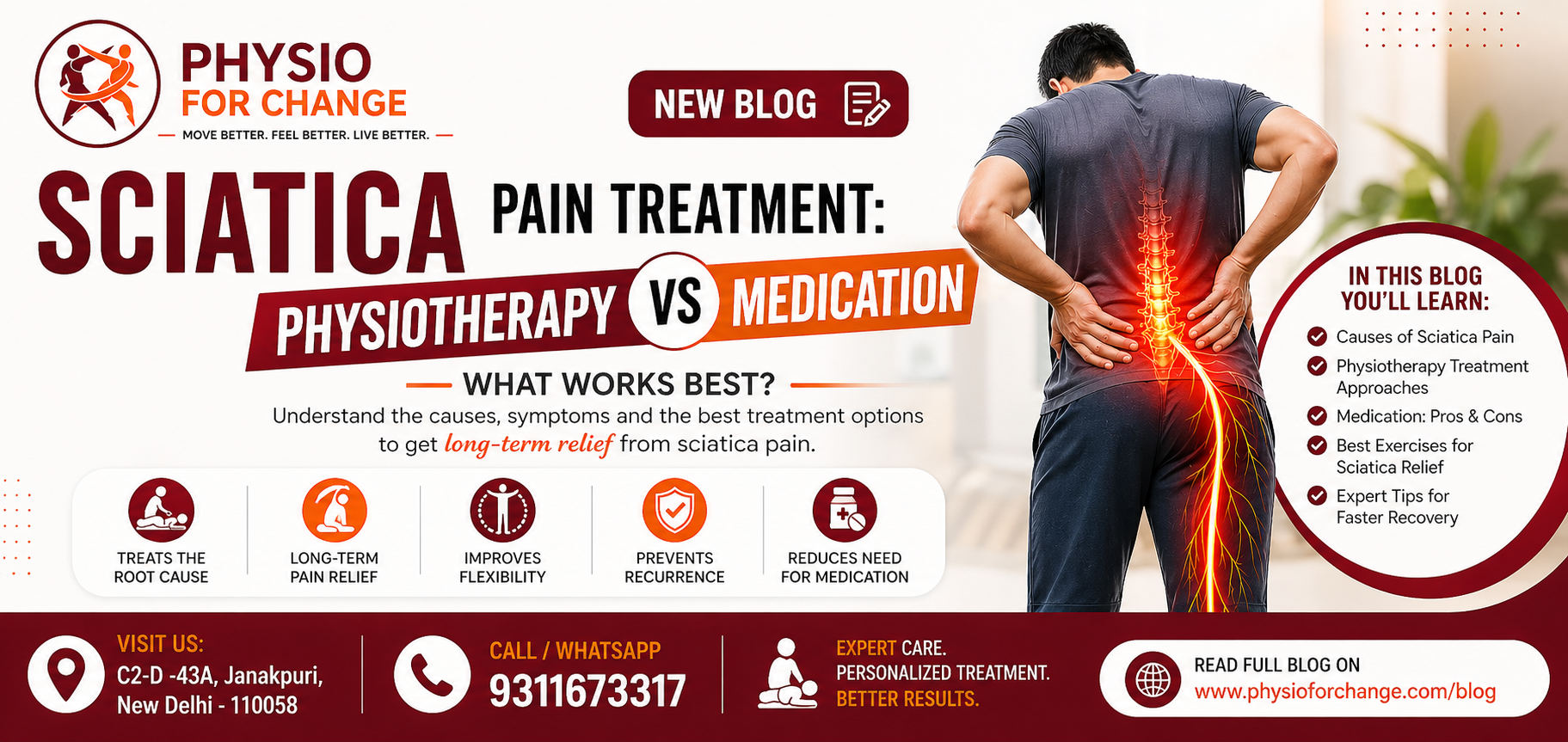
Sciatica Pain Treatment: Physiotherapy vs Medication
What is Sciatica?
Sciatica is not a disease but a condition caused by irritation or compression of the sciatic nerve—the longest nerve in the body. It usually starts in the lower back and radiates down through the hips, buttocks, and legs.
Common Symptoms of Sciatica
-
Sharp or burning pain in the lower back
-
Pain radiating to one leg
-
Numbness or tingling sensation
-
Muscle weakness in the affected leg
-
Difficulty sitting or standing for long periods
Causes of Sciatica
-
Herniated (slipped) disc
-
Poor posture
-
Prolonged sitting
-
Spinal stenosis
-
Muscle tightness (especially piriformis syndrome)
Medication for Sciatica Pain
How Medication Helps
Medications are often the first line of treatment for sciatica because they provide quick relief.
Common Types of Medication
-
Painkillers (NSAIDs like ibuprofen)
-
Muscle relaxants
-
Nerve pain medications
-
Steroid injections (in severe cases)
Pros of Medication
✔ Fast pain relief
✔ Easily accessible
✔ Useful in acute (sudden) pain
Cons of Medication
✘ Temporary relief only
✘ Does not treat the root cause
✘ Possible side effects (gastric issues, dependency)
👉 Conclusion: Medication helps manage symptoms but does not fix the underlying problem.
Physiotherapy for Sciatica Pain
How Physiotherapy Works
Physiotherapy focuses on identifying and treating the root cause of sciatica rather than just masking the pain.
Techniques Used in Physiotherapy
-
Targeted exercises
-
Stretching routines
-
Manual therapy
-
Posture correction
-
Electrotherapy (IFT, TENS, ultrasound)
Benefits of Physiotherapy
✔ Treats the root cause
✔ Long-term pain relief
✔ Improves mobility and flexibility
✔ Prevents recurrence
✔ No harmful side effects
Effective Physiotherapy Exercises for Sciatica
1. McKenzie Extension Exercise
Helps reduce nerve pressure and centralize pain.
2. Piriformis Stretch
Relieves tight muscles compressing the sciatic nerve.
3. Hamstring Stretch
Improves flexibility and reduces nerve tension.
4. Pelvic Tilt Exercise
Strengthens core muscles and supports the spine.
⚠️ Always perform exercises under professional guidance.
Physiotherapy vs Medication: Which is Better?
| Factor | Medication | Physiotherapy |
|---|---|---|
| Pain Relief | Fast but temporary | Gradual but long-lasting |
| Root Cause Fix | ❌ No | ✅ Yes |
| Side Effects | Possible | Minimal |
| Long-Term Benefit | ❌ No | ✅ Yes |
👉 Final Verdict:
While medication can provide quick relief, physiotherapy is the best long-term solution for sciatica pain.
When Should You See a Physiotherapist?
-
Pain lasting more than 1 week
-
Severe pain affecting daily activities
-
Numbness or weakness in the leg
-
Recurring back pain issues
Why Choose “Physio for Change”?
At Physio for Change, we focus on personalized treatment plans that target the root cause of your pain and help you recover faster and stronger.
Contact Details
📍 Address:
C2-D-43A, Janakpuri,
New Delhi – 110058
📞 Call/WhatsApp: 9311673317
Final Thoughts
Ignoring sciatica or relying only on medication can worsen the condition over time. Early physiotherapy intervention not only reduces pain but also restores your quality of life.
👉 Don’t just treat the pain—fix the cause.
FAQs
Q1. Can sciatica go away on its own?
Yes, mild cases may improve, but proper treatment speeds up recovery and prevents recurrence.
Q2. Is walking good for sciatica?
Yes, light walking can help, but avoid overexertion.
Q3. How long does recovery take?
With physiotherapy, most patients improve within 4–6 weeks.
✍️ Written by Dr. Mehak nanda (PT) – Your Partner in Pain-Free Living